Membrane hiking boots
Nominated membrane SKUs are checked against a 10,000 mm hydrostatic head target with taped seams. PU-coated uppers at 8,000 mm are excluded from this report class.
This page is the evidence map for ISO 9001:2015, amfori BSCI, OEKO-TEX STANDARD 100, SATRA footwear tests, ASTM F2913 slip-resistance and destination-market files. Nature, carbon and ESG campaign language is not used here; the layout is a compliance roadmap for technical buyers.
Textile lots arrive with OEKO-TEX STANDARD 100 letters. Rubber cups arrive with compound codes. Membrane rolls arrive with hydrostatic head certificates. Lots without letters stay in quarantine.
ISO 9001:2015 records cover last code, stitch class, overlay weld map, slip-in collar tool and outsole bond. Inline audits follow the producing site’s amfori BSCI file, not a generic factory brochure.
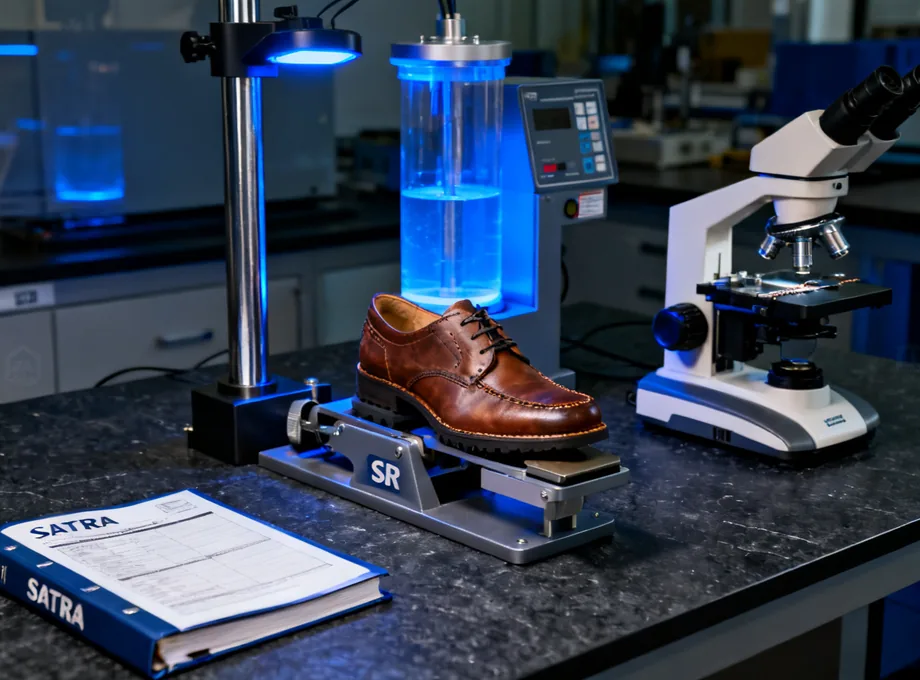
SATRA-style flex, bond and abrasion run on gold and production samples. Waterproof hiking boots add a 10,000 mm hydrostatic check. DWR-only SKUs are not given a membrane report. Work SR cups add ASTM F2913 when that class is on the sheet.
US kids sizes add CPSIA tracking. EU textile SKUs keep OEKO-TEX scope. Work SKUs add ASTM F2413 only when a safety plate is actually specified. Carton marks match the locked construction sheet.
Numbers below are method windows, not advertising multipliers. A buyer who needs a different hydrostatic class or a safety-toe plate must say so in the brief; the lab will not invent a higher class after shipment.
Nominated membrane SKUs are checked against a 10,000 mm hydrostatic head target with taped seams. PU-coated uppers at 8,000 mm are excluded from this report class.
Flex crack, outsole bond and lug abrasion sit in the retained-sample file. Hiking lots use a tougher abrasion threshold than Aero Tempo foam packages that share a similar side profile.
The producing site keeps an ISO 9001:2015 record for last code, inspection sampling and nonconforming pair handling. The certificate number is issued with the dossier, not printed as decoration on the website.
Dighton SR cups are quoted against ASTM F2913 on wet and oily ceramic tile. The figure does not transfer to wet granite or gym wood. F2413 safety-toe language is a different construction.
Skechers’ core catalog on this site is athletic and outdoor footwear. Sister outdoor programs sometimes sit in the same buyer brief. EN 15194 and UL 2849 are electrical/EPAC standards for e-mobility SKUs; they are attached only when an ebike or e-scooter item is actually on the order. EN ISO 12402 is a PFD/lifejacket buoyancy standard; water shoes and sandals are not flotation devices and do not inherit a newton buoyancy rating. Claiming those marks on a hiking boot is treated as a labeling error.
GORE-TEX versus PU coating remains the most frequent construction dispute. Membrane + taped seam is one waterproof class. PU coating is another. DWR spray on an engineered knit is water-resistant only. Skechers will print the class that was tested, not the class a catalog photo suggests.
A second recurring dispute is recycled EVA versus compression set. Nominated walking lots can carry a stated recycled content percentage in the midsole. Recycled lots can show a higher compression set after SATRA-style cyclic loading than virgin EVA at the same Shore C. The recycled percentage and the compression-set window are printed together. A buyer who needs the lowest compression set should stay on virgin EVA; a buyer who needs a recycled claim should accept the stated set window rather than asking for both.
Hands-Free Slip-in collars are not created by deleting eyelets from a lace last. Memory-foam comfort pads are not energy-return midsoles. High-stack running geometry is not transferred onto pickleball court lasts; indoor gum rubber needs a lower stack for lateral stability. Membrane boots are not quoted for hot, dry trail programs where a DWR knit is the stated path. Kids US sizes without a CPSIA tracking discussion are held. Composite or steel toe claims stay off the hangtag until an F2413 plate is actually tooled into that last.

Flex, bond and abrasion protocols used on hiking boots, trail shoes, running trainers and work SR cups. Reports name the method and the sample size, not a pass/fail slogan.

STANDARD 100 letters are issued by article and mill. Upper textiles and laces are scoped separately from foam and rubber.

Social-audit summaries name the producing site. A Skechers group brochure is not a substitute for the site file.

Wet-oily ceramic tile method for nominated work cups. The note is not applied to road running outsoles or golf nubs.
Name the SKU list, destination market and which letters you need: ISO 9001:2015, amfori BSCI, OEKO-TEX STANDARD 100, SATRA notes, ASTM F2913. The contact page holds the map and hours; this form uses the same fields.