Road running
Aero Tempo and Aero Burst lasts with a stated drop and EVA or Phylon stack. Outsoles use a road rubber compound, not a hiking lug or a siped SR cup. Energy-return language waits for a named foam and cyclic-loading note.
Each vertical below is a last and outsole map, not a lifestyle headline. Road running, walking, work, trail, court, golf and team wholesale share a construction sequence and then diverge on drop, Arch Fit insole map, slip-in collar, SR compound, membrane option and size-run rules.
Scroll the row on desktop. Each card states the governing last and the compound that usually travels with it. Typical values remain screening data until the retain lot is tested.
Aero Tempo and Aero Burst lasts with a stated drop and EVA or Phylon stack. Outsoles use a road rubber compound, not a hiking lug or a siped SR cup. Energy-return language waits for a named foam and cyclic-loading note.
Arch Fit walking lasts use an 8–12 mm drop window. Hands-Free Slip-in collars add a collapsible heel counter. Memory-foam comfort pads sit above the EVA cup and are not treated as midsole foam.
Relaxed Fit work lasts carry siped rubber quoted against ASTM F2913 on wet and oily ceramic tile. ASTM F2413 safety-toe language is withheld unless a plate is tooled. Garage and warehouse SKUs stay on the SR class that was tested.
Hiking lasts add a shank and higher collar. Waterproof packs name GORE-TEX membrane or PU coating plus hydrostatic head in mm. DWR alone is not written as waterproof. Trail running cups do not inherit a work SR siping map.
Herringbone or modified herringbone cups for pickleball and indoor court. SKX basketball lasts add a lateral TPU map. Hiking lugs are not restyled into court shoes. Vegan SKX uppers are named only when the material file is in scope.
Spikeless TPU golf nubs are a different cup from metal-cleat golf. Soccer FG, AG and TF plates are not interchangeable. A running last is not graded into a cleat by swapping the outsole after PP.
The cases are category descriptions. They show which fields move when a buyer changes channel or activity. They are not endorsements and they do not cite a market share.
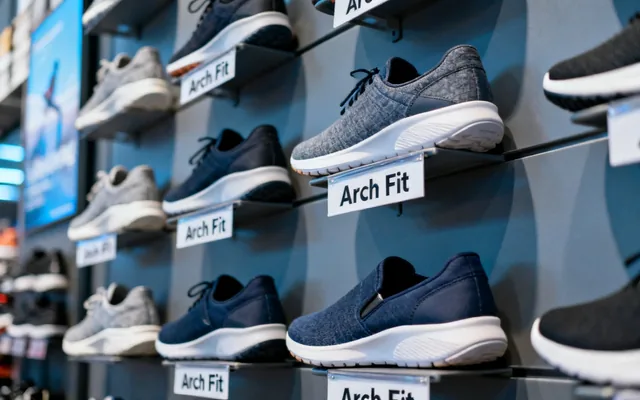
A multi-country retailer asked for two walking lasts, Arch Fit lace and Hands-Free Slip-in, and a shared EVA density window so SKUs could share foam tooling where possible. Colorways stayed on the same last. The dossier listed OEKO-TEX STANDARD 100 for the knit uppers actually used. Stock wholesale clocks applied because the lasts already existed.
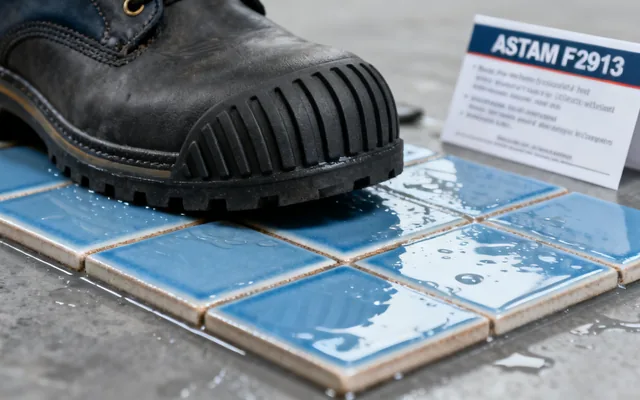
A food-service distributor compared Dighton SR siped cups with a composite-toe request on the same Relaxed Fit last. ASTM F2913 stayed on the SR file. The toe-cap request opened a new F2413 construction and a separate OEM clock. Mixing the two claims on one hangtag was declined.
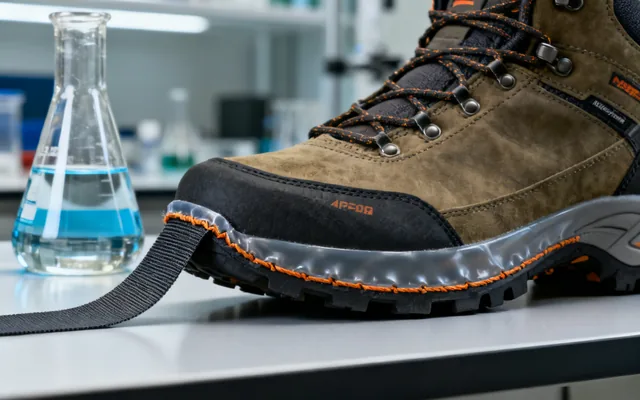
An outdoor distributor compared membrane hiking shoes with a PU-coated alternative on the same last. Hydrostatic head, seam map and dry mass changed enough that the PU version became a second construction. DWR on the coated version was written as a finish. The buyer received two retain lots rather than one relabeled SKU.
Across these cases the disputed choice is rarely “more cushioning.” It is last volume, Arch Fit insole versus memory-foam pad, Hands-Free Slip-in collar versus lace last, GORE-TEX membrane versus PU coating, ASTM F2913 SR versus F2413 safety toe, and stock wholesale versus private-label OEM. Those decisions determine tooling, hydrostatic head, dossier scope and lead time. Unlimited waterproofing and injury-proof language stay off the pack. Selection considerations that buyers should put in writing: destination market, pair count, whether youth sizes apply, and whether the order is a stock last or a recut.
Typical program scale we see on this desk: a specialty walking wall of 1,200–3,000 pairs per season on two lasts; a work SR replenishment of 600–1,800 pairs; a trail membrane swap of 400–900 pairs split across two constructions. Those ranges are screening examples from 2023–2025 trading-desk calendars, not a published market study. If your volume sits outside them, say so on the brief so the factory slot is booked against the right clock.

Send activity, pair count and whether the order is stock-wholesale or private-label OEM. The Manhattan Beach desk returns a last map, not a campaign film.